
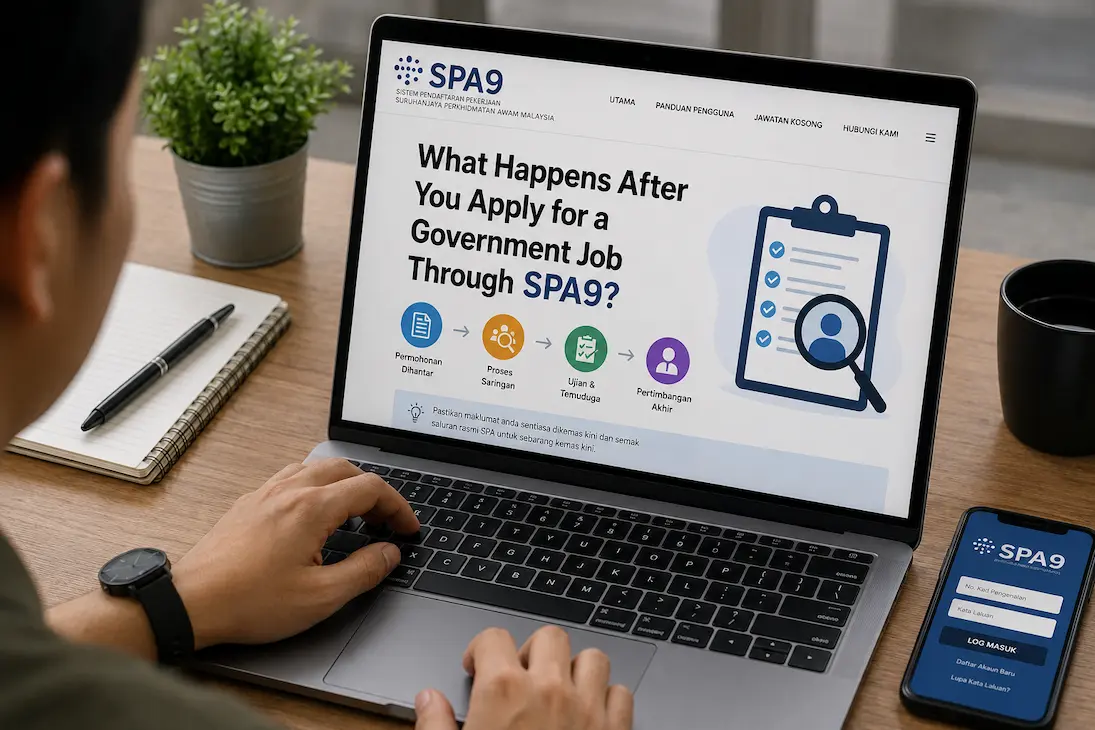
Submitting a government job application through SPA9 can feel like the end of the process, but it is really the point where the waiting begins. After completing your profile, selecting a suitable position, and submitting the application, you may not receive an immediate update. Some applicants see their application remain active for a while, while others may eventually receive an invitation for an assessment, psychometric test, or interview.
The important thing is not to assume that a quiet application means something has gone wrong. Recruitment depends on the position, the number of applicants, the requirements for the vacancy, and the stage reached by the relevant recruitment process. Your responsibility after applying is mainly to keep your information accurate, monitor the appropriate channels, and respond promptly if SPA contacts you.
This guide explains what generally happens after a SPA9 application is submitted, what applicants should monitor, what a shortlist or assessment invitation can mean, and what to do when there is no immediate update.
Your Application Does Not Usually Move Straight to an Interview
After you submit an application through SPA9, there is normally a period in which the application remains in the recruitment system while the relevant process progresses. Applying for a position does not mean that an interview will automatically follow.
There can be several stages between submitting an application and being considered for an appointment. The exact process depends on the position and the recruitment exercise, so applicants should avoid assuming that every government vacancy follows the same sequence.
A simplified example looks like this:
SPA9 profile and application → eligibility and application processing → selection for the next stage, where applicable → assessment or psychometric test → interview, where applicable → further appointment procedures
Not every applicant will reach every stage. Some positions may have different requirements or selection arrangements.
This is why it is useful to think of a SPA9 application as an ongoing recruitment process rather than a single event that ends when you click the submit button.
Start by Checking What You Actually Submitted
Before worrying about the status of an application, make sure you know which positions you applied for and whether the relevant information in your SPA9 profile is still correct.
This is particularly important if you have submitted applications at different times. Applicants sometimes remember applying for a position but later discover that their profile information, contact details, qualifications, or other information has changed.
Keep an eye on information such as:
- The positions you have applied for
- Your personal and contact details
- Academic qualifications and other relevant information
- Work experience where applicable
- Any information required for the positions you selected
- The validity or accuracy of information in your SPA9 profile
If something has genuinely changed, update your information through the appropriate SPA9 process rather than leaving outdated information in the profile.
However, avoid repeatedly changing information simply because you are waiting for a response. Make changes when there is a real reason to do so and review the information carefully before saving it.
How to Monitor Your SPA9 Applications
One of the simplest mistakes an applicant can make is submitting an application and then forgetting about it.
After applying, periodically sign in to the official SPA9 system and review your application information and any available updates. Do not rely entirely on social media posts or messages from other applicants to determine what is happening with your own application.
The status or wording you see can depend on the position and the stage of the recruitment process. If an application appears unchanged for some time, that does not necessarily mean that it has been rejected.
It is also worth checking the contact information associated with your application. If your phone number or email address has changed, make sure your details are kept current where the system permits this.
A useful habit is to record the positions you apply for and the approximate date of each application. You do not need an elaborate spreadsheet. A simple note containing the position name, application date, and any later update can make it much easier to keep track.
What If Your Application Is Shortlisted?
Being shortlisted is an important step, but it should not be treated as a guarantee of appointment.
A shortlist generally means that you have progressed to another stage of consideration for the particular recruitment exercise. Depending on the position, the next step could involve an assessment, psychometric test, interview, or another process specified by the relevant recruitment authority.
If you receive an invitation, read the instructions carefully rather than relying on what someone else experienced with a different position.
Pay particular attention to:
- The date and time
- The required location or online arrangements
- Documents or information you need to provide
- Any instructions about preparation
- Deadlines for confirming participation
- Any specific requirements stated in the official notification
Missing a deadline or failing to follow an instruction can create a problem that has nothing to do with your qualifications.
If the next stage involves a public-sector psychometric assessment, for example, preparation should focus on understanding the format and responding consistently rather than trying to find a supposed set of answers that guarantees selection.
For more information, applicants can also refer to a dedicated guide on how to prepare for and approach the public-sector psychometric test.
The Waiting Period Can Be the Most Confusing Part
One of the most frustrating experiences after submitting a government job application is seeing little or no change for an extended period.
It is tempting to interpret silence as rejection. That is not always justified.
Recruitment timelines can vary, and different vacancies can move through their stages at different speeds. The number of applicants, administrative processing, vacancy requirements, and the recruitment schedule can all affect how quickly a particular process moves.
If your application has not produced an immediate result, there is usually little value in repeatedly submitting the same application or making unnecessary changes to your profile.
Instead, check the official system for updates and continue applying for other suitable positions when you meet their requirements.
That last point is particularly important. A pending application should not stop you from considering other opportunities.
What you can do while waiting
Use the waiting period productively rather than checking your application every few hours.
You can:
- Review your SPA9 profile for genuine errors or outdated information.
- Make sure your contact details are current.
- Keep copies of important academic and employment documents organized.
- Prepare for possible assessments or interviews.
- Look for other suitable vacancies.
- Read official instructions carefully when a new notification arrives.
There is no benefit in putting your job search on hold simply because one application is still being processed.
What Happens If You Are Invited to a Psychometric Test?
Some government recruitment processes may involve a psychometric assessment before an interview or another selection stage.
If you receive an official invitation, first confirm the details in the notification and follow the instructions provided.
A psychometric assessment is not the same thing as an academic examination. Trying to memorize random answers found online can be counterproductive because such assessments may be designed to evaluate characteristics or tendencies relevant to the role.
A better approach is to:
- Read the instructions carefully.
- Understand what type of questions you will encounter.
- Answer honestly and consistently.
- Make sure you have enough time and a suitable environment.
- Follow the official instructions for accessing the assessment.
- Check any stated technical requirements before the assessment begins.
If you are unsure about a particular requirement, use the official recruitment information rather than relying on advice posted by an unrelated account.
What Happens After the Interview?
If you eventually reach the interview stage, the recruitment process still may not be finished.
An interview allows the relevant selection panel to assess candidates against the requirements and criteria for the position. Being invited to an interview is therefore significant, but it does not mean that every person interviewed will receive an appointment.
After an interview, there may be additional administrative or selection procedures before an appointment is confirmed. The exact steps can differ depending on the position and recruitment exercise.
This is another reason not to assume that a lack of an immediate appointment notification means something has gone wrong.
While waiting, continue monitoring official communications and keep your information up to date.
What If You Are Not Shortlisted?
Not being shortlisted can be disappointing, particularly when you believe you meet the requirements of the position.
However, it does not necessarily mean that you are unsuitable for government employment generally. Recruitment is conducted for specific positions and recruitment exercises, and applicants are considered according to the requirements and selection process applicable to that opportunity.
If your SPA9 application is not shortlisted, review the information you provided and consider whether the position was a good match for your qualifications and experience.
You can also continue applying for other positions for which you genuinely meet the stated requirements.
Avoid changing your qualifications, experience, or other information simply to appear more suitable. Application information should remain accurate and supportable.
If you want to understand the issue in more detail, your next step can be to review what to do if your SPA9 job application is not shortlisted and use that as a separate checklist.
Keep Your SPA9 Profile Ready for Future Applications
A common mistake is treating the SPA9 profile as something that only matters when applying for one particular position.
If you intend to apply for government jobs regularly, maintaining an accurate profile can make future applications easier.
Whenever you have a legitimate change to your qualifications, contact details, work experience, or other relevant information, review whether your SPA9 profile should be updated.
At the same time, do not add qualifications or information that you cannot verify. Accuracy is more important than making a profile appear longer.
It is also useful to keep your supporting documents organized outside the recruitment system. Having certificates and other relevant records available can save time when a particular recruitment exercise requires them.
Common Mistakes After Submitting a SPA9 Application
Most applicants are focused on getting shortlisted, but what they do after submitting the application can also matter.
Here are some mistakes worth avoiding:
Assuming submission means automatic consideration for every future vacancy.
A submitted application relates to the position and recruitment process for which you applied. New vacancies may require separate applications.
Ignoring your account after applying.
Important updates can be missed if you never check the official system or the contact details associated with your profile.
Treating an unchanged status as an immediate rejection.
A lack of a new update does not, by itself, tell you why an application has not progressed.
Submitting inaccurate information.
Never alter qualifications, experience, or personal information simply to meet what you think a recruiter wants to see.
Relying on unofficial messages.
Recruitment advice shared in Facebook groups, WhatsApp conversations, TikTok videos, or forums can be outdated or specific to a different recruitment exercise.
Stopping your job search while waiting.
There is no need to depend on one application. If you meet the requirements for another suitable position, consider applying for it as well.
A Simple Way to Keep Track of Your Applications
If you apply for several positions, keeping track of them becomes increasingly useful.
You could maintain a simple record like this:
| Position | Date applied | Current status | Next action |
|---|---|---|---|
| Position A | Date submitted | Waiting for update | Monitor SPA9 |
| Position B | Date submitted | Assessment invitation | Prepare as instructed |
| Position C | Date submitted | Not shortlisted | Look for other suitable vacancies |
The purpose is not to predict when you will be selected. It is simply to prevent different applications from becoming confused with one another.
This can be especially helpful when you apply for several positions over a number of months.
Don’t Change Your Profile Just Because You Are Waiting
There is a difference between keeping your information updated and constantly modifying your profile in the hope that an application will suddenly move forward.
If your information is correct, leave it alone.
For example, repeatedly changing a qualification description, removing and re-entering information, or making unnecessary profile changes is unlikely to provide a shortcut through the recruitment process.
If you discover a genuine mistake, correct it using the proper procedure. Otherwise, focus your time on preparing for potential next stages and looking for other suitable opportunities.
Be Careful With “Guaranteed Selection” Advice
Government recruitment attracts plenty of unofficial advice online. Some of it can be useful, but applicants should be cautious when someone claims to have a guaranteed method for getting shortlisted or passing a government assessment.
There is no need to pay someone simply because they claim to have access to a secret SPA9 selection method.
For recruitment information, prioritize official sources and the instructions included with your application or invitation.
This is particularly important when someone asks for your login details, personal documents, payment, or other sensitive information. Your SPA9 credentials should not be shared with strangers offering application assistance.
A Better Approach While Your Application Is Pending
If your application is still waiting, the most sensible approach is fairly simple:
Check → verify → prepare → continue.
First, check the official SPA9 system for any available update. Then verify that your profile and contact information are accurate. Prepare for a possible assessment or interview if your position requires one. Finally, continue looking for other suitable government vacancies rather than waiting for one application to determine your entire job search.
This approach is more useful than repeatedly checking the same application without taking any other action.
Remember that recruitment processes can change, and the steps for one position may not be identical to another. Always give priority to the current instructions associated with the specific recruitment exercise.
Conclusion
Submitting a SPA9 application is only one part of the government recruitment process. After applying, the most useful thing you can do is stay organized without assuming that every period of silence means rejection.
Check the official system for updates, keep your information accurate, watch your contact details, and pay close attention if you receive an assessment or interview invitation. If your application does not progress, don’t let one result stop your wider job search.
Most importantly, treat each recruitment exercise as a separate process. Requirements, stages, and instructions can differ between positions, so the official information associated with your particular application should always take priority over general advice found online.
A good SPA9 strategy is therefore not simply apply and wait. It is apply carefully, keep your profile accurate, monitor the process, prepare for the next stage, and continue looking for opportunities that match your qualifications.
Frequently Asked Questions
How long does it take to hear back after applying through SPA9?
There is no single waiting period that applies to every SPA9 application. Recruitment timelines can vary according to the position and recruitment process. If there is no immediate update, continue checking the official system and keep your contact information current.
Does applying through SPA9 guarantee an interview?
No. Submitting an application does not guarantee that you will be shortlisted or invited to an interview. Applicants must progress through the relevant selection process for the particular position.
Should I keep applying for other government jobs while waiting?
Yes. If you meet the stated requirements for another suitable position, there is generally no reason to stop your job search simply because an earlier application is still being processed.
What should I do if I receive a psychometric test invitation?
Read the official notification carefully, confirm the date and instructions, and prepare according to the requirements provided. Focus on understanding the assessment and answering consistently rather than relying on supposed guaranteed answers.
What if my SPA9 application is not shortlisted?
Review the application and make sure the information you provided was accurate and relevant to the position. You can continue applying for other positions for which you meet the requirements. Not being shortlisted for one recruitment exercise does not automatically mean that you cannot be considered for another.
Should I change my SPA9 profile while waiting?
Only make changes when your information genuinely needs to be corrected or updated. Avoid repeatedly changing a correct profile in the hope of influencing an application’s progress.