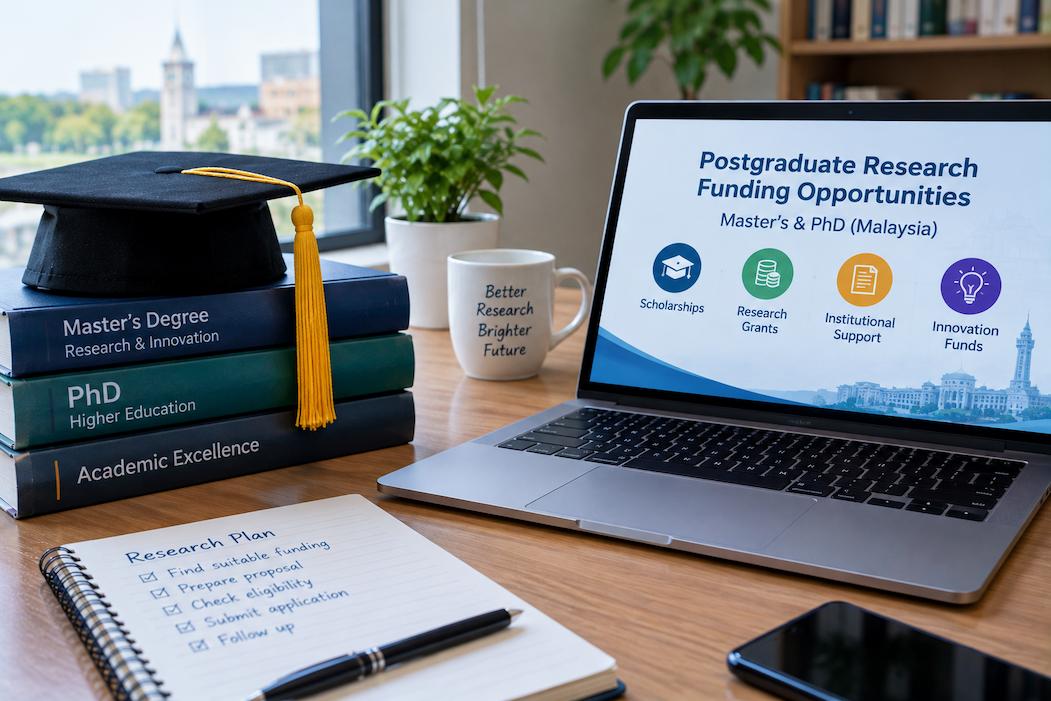
Melangkah dari peringkat Ijazah Sarjana Muda ke dunia penyelidikan pascasiswazah (Sarjana/Master dan Doktor Falsafah/PhD) adalah satu komitmen akademik yang menuntut ketahanan mental dan kewangan yang jitu. Berbeza dengan pengajian ijazah pertama yang lazimnya dibiayai sepenuhnya oleh PTPTN, pengajian pascasiswazah melibatkan kos yuran pengajian yang tinggi, perbelanjaan eksperimen makmal, pengumpulan data lapangan, serta kos penerbitan jurnal berindeks (Scopus/WOS).
Sebagai pentadbir yang meneliti pengurusan biasiswa tinggi, saya sering melihat ramai penyelidik muda terpaksa menangguhkan pengajian mereka di tengah jalan akibat kehabisan dana. Panduan komprehensif ini merungkai pelbagai saluran pembiayaan rasmi, biasiswa kementerian, dan geran penyelidikan tersembunyi di Malaysia yang direka khusus untuk menampung pengajian pascasiswazah anda tanpa perlu berhutang.
Jenis Pembiayaan Pascasiswazah Utama
Sebelum anda menghantar kertas cadangan penyelidikan (*research proposal*) ke universiti pilihan, kenal pasti tiga kategori utama sumber dana yang ditawarkan di Malaysia:
- Biasiswa Penuh Persekutuan (MyBrain / JPA): Tajaan penuh yuran pengajian dan elaun sara hidup bulanan yang disediakan oleh agensi kerajaan bagi melahirkan tenaga pakar negara.
- Geran Penyelidikan Universiti (MyRA / GRA): Skim pembantu penyelidik (*Graduate Research Assistant – GRA*) di mana anda diupah oleh profesor untuk menjadi sebahagian daripada projek penyelidikan berstatus FRGS yang mempunyai peruntukan kementerian.
- Bantuan Yayasan Negeri & Badan Berkanun: Dana khusus anak jati negeri atau agensi industri (seperti Yayasan Selangor, Khazanah, atau Petronas) untuk bidang strategik tertentu.
Jadual Rujukan: Perbandingan Skim Tajaan Pascasiswazah Popular
Matriks perbandingan di bawah membantu anda menilai program penajaan yang paling sepadan dengan status pengajian (Sains Tulen vs Sastera Iktisas) dan keperluan kewangan anda.
| Nama Skim Tajaan | Bentuk & Skop Pembiayaan | Syarat Ikatan Kontrak |
|---|---|---|
| Biasiswa MyBrain / JPA (Pascasiswazah) | Yuran pengajian penuh + Elaun sara hidup bulanan + Bantuan yuran tesis. | Ikatan perkhidmatan kerajaan atau sektor swasta tempatan. |
| Skim Pembantu Penyelidik (GRA / MyRA) | Gaji bulanan (Stipend) berasaskan projek geran universiti + Pengecualian yuran separa/penuh. | Wajib menyiapkan projek penyelidikan profesor tepat pada masanya. |
| Tabung Pelajaran Majlis Agama / Zakat Negeri | Bantuan kewangan yuran dan sara hidup khas kategori asnaf/fisabilillah. | Tiada ikatan kerja, tertakluk kepada prestasi akademik (CGPA). |
Panduan Langkah demi Langkah: Permohonan Melalui Portal MyCooperative / JPA
Prosedur permohonan biasiswa pascasiswazah menuntut ketelitian tinggi pada kertas cadangan penyelidikan anda, kerana panel penilai terdiri daripada pakar akademik pelbagai disiplin.
Langkah 1: Dapatkan Surat Tawaran Bersyarat (Conditional Offer)
Sebelum anda memohon mana-mana biasiswa persekutuan (JPA/KPT), anda wajib mendapatkan surat tawaran kemasukan rasmi (Master secara Penyelidikan / PhD) daripada mana-mana Universiti Awam di Malaysia. Permohonan biasiswa yang dihantar tanpa surat tawaran universiti akan ditolak serta-merta oleh sistem.
Modul Penilaian
KRITERIA UTAMA PENILAIAN PANEL:
- Kualiti Cadangan Penyelidikan (Proposal): Relevan kepada keperluan dasar pembangunan negara dan inovasi industri.
- Potensi Penerbitan Jurnal: Keupayaan calon menerbitkan sekurang-kurangnya 1-2 artikel Scopus sebelum tamat tempoh pengajian.
- Kepakaran Penyelia (Supervisor): Rekod penerbitan akademik penyelia utama anda di universiti.
Langkah 2: Sediakan Pembentangan Kertas Cadangan (Pitching)
Jika anda melepasi tapisan dokumen, anda akan dipanggil untuk sesi temu duga bersemuka atau pembentangan dalam talian (*online pitching*). Yakinkan panel bahawa kajian anda bukan sekadar mengulang kaji tesis lama, tetapi membawa nilai tambah ekonomi atau sosial yang ketara.
Nasihat Pentadbiran / Tips Orang Dalam
Sebagai individu yang menguruskan peruntukan geran penyelidikan, nasihat terbesar saya kepada bakal pelajar PhD ialah: Jangan tunggu biasiswa lulus baru nak mula cari penyelia.
Langkah paling strategik ialah menghubungi profesor di fakulti universiti sasaran anda 3 bulan sebelum permohonan biasiswa dibuka. Bentangkan cadangan ringkas anda. Jika profesor tersebut berminat dengan tajuk anda, beliau akan mengeluarkan *Surat Sokongan Penyelia* (Supervisor Support Letter). Kehadiran surat sokongan rasmi daripada profesor senior di dalam lampiran permohonan biasiswa anda meningkatkan kebarangkalian kelulusan biasiswa sebanyak 80% kerana ia membuktikan kajian anda diselia oleh pakar yang diiktiraf.
Penyelesaian Masalah & Ralat Pembiayaan Pascasiswazah
Perjalanan menuntut ilmu di peringkat tinggi sering berdepan kekangan birokrasi. Berikut adalah 3 krisis lazim dan cara mengatasinya:
1. Biasiswa Lambat Masuk / Tergendala di Pertengahan Semester
- Punca: Kelewatan pihak fakulti universiti menghantar Borang Tuntutan Kemajuan Semester (*Progress Report*) pelajar kepada urus setia penaja JPA/KPT.
- Penyelesaian: Sentiasa semak dengan Pejabat Pengajian Siswazah (School of Graduate Studies) universiti anda pada minggu pertama setiap semester bagi memastikan laporan prestasi penyelia anda telah dimuat naik ke dalam sistem penaja tepat pada masanya.
2. Ditolak Tajaan Kerana Bidang Pengajian Dianggap “Tidak Kritikal”
- Punca: Tajuk penyelidikan anda terlalu umum atau tidak sepadan dengan kerangka Dasar Sains, Teknologi dan Inovasi Negara (DSTIN).
- Penyelesaian: Ubah sedikit skop penulisan tajuk dan objektif kajian anda untuk menekankan elemen penyelesaian masalah nasional (seperti tenaga hijau, keselamatan makanan, kecerdasan buatan, atau bioteknologi) agar ia selari dengan keutamaan bajet penaja.
3. Gagal Menyiapkan Pengajian dalam Tempoh Tajaan (Vot Lanjutan)
- Punca: Kajian makmal tergendala atau masalah mendapatkan data lapangan menyebabkan tempoh biasiswa 3 tahun (Master) atau 4 tahun (PhD) tamat sebelum tesis siap.
- Penyelesaian: Mohon “Pelanjutan Tempoh Pengajian Tanpa Beasiswa” (Extension without Scholarship) secara rasmi melalui senat universiti sekurang-kurangnya 3 bulan sebelum tamat tempoh, dan manfaatkan geran kecil universiti atau kerja sambilan sebagai *Tutor/RA* untuk menyara bulan-bulan terakhir penulisan anda.
Soalan Lazim (FAQ) Pembiayaan Pascasiswazah
1. Bolehkah saya bekerja sepenuh masa di sektor swasta sambil menerima biasiswa pascasiswazah kerajaan?
Tidak boleh. Syarat mutlak biasiswa pascasiswazah persekutuan (seperti JPA/KPT) melarang penerimanya daripada terikat dengan sebarang pekerjaan bergaji tetap di sektor awam atau swasta sepanjang tempoh tajaan, kerana anda diwajibkan menumpukan masa 100% kepada penyelidikan akademik.
2. Adakah yuran penerbitan jurnal antarabangsa ditanggung oleh pihak penaja biasiswa?
Kebanyakan penaja utama menyediakan elaun khas persidangan atau geran kecil penerbitan di dalam pakej biasiswa mereka. Selain itu, anda juga boleh memohon dana insentif penerbitan jurnal daripada bahagian Timbalan Naib Canselor (Penyelidikan & Inovasi) di universiti anda.
3. Apa jadi pada status hutang biasiswa jika saya gagal menamatkan pengajian PhD saya?
Kegagalan menamatkan pengajian dalam tempoh ikatan akan menyebabkan status biasiswa anda diubah kepada “Pecah Kontrak”. Anda dan penjamin diwajibkan memulangkan semula sebahagian atau keseluruhan kos tajaan yang telah dibelanjakan oleh kerajaan mengikut terma perjanjian undang-undang yang ditandatangani pada hari pertama penerimaan biasiswa.
Pembiayaan penyelidikan pascasiswazah adalah pelaburan modal insan negara yang sangat bernilai. Rancang strategi permohonan anda dengan teliti, dapatkan sokongan penyelia lebih awal, dan kekalkan disiplin penulisan yang tinggi agar impian anda melakar penemuan ilmiah baharu disokong oleh struktur kewangan yang utuh dan selesa.