
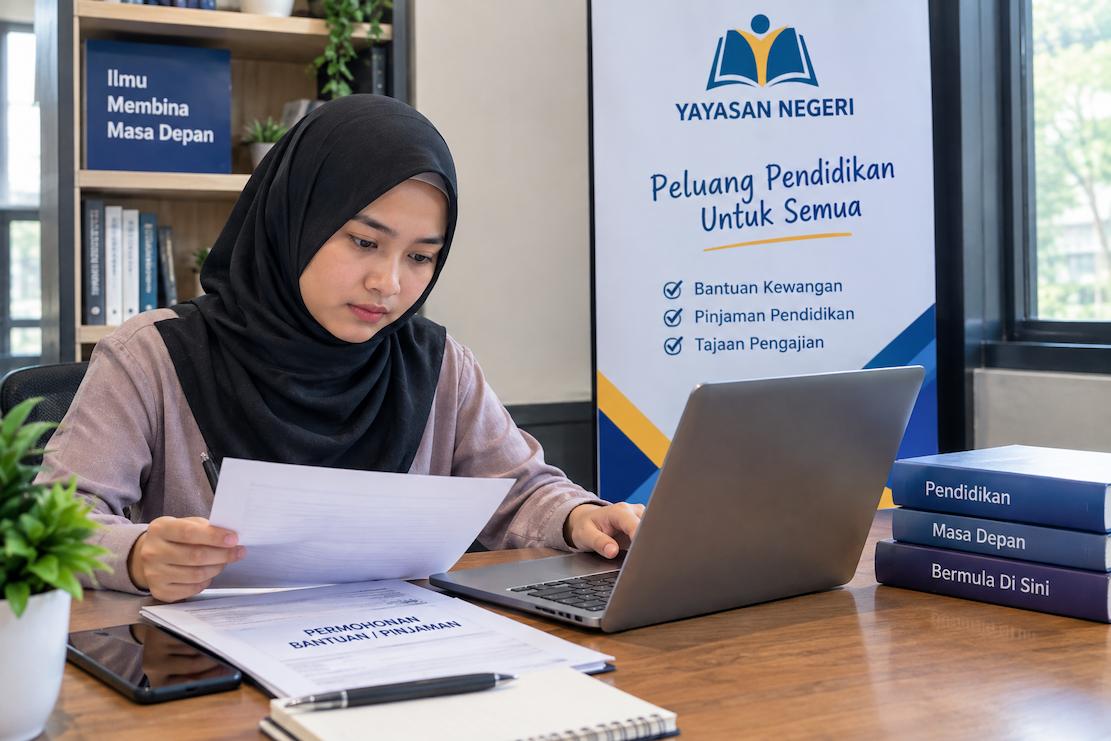
Apabila tawaran melanjutkan pengajian ke menara gading diterima, halangan terbesar yang dihadapi oleh pelajar dan ibu bapa lazimnya bukanlah kelayakan akademik, tetapi kekangan kewangan untuk membayar yuran pendaftaran semester pertama. Walaupun Perbadanan Tabung Pendidikan Tinggi Nasional (PTPTN) dan biasiswa persekutuan menjadi pilihan utama, ramai yang terlepas pandang satu sumber dana bernilai tinggi yang disediakan khusus oleh kerajaan negeri: Yayasan Pendidikan Negeri (Yayasan Negeri).
Sebagai pentadbir yang menguruskan hal ehwal kebajikan dan penajaan pelajar, saya kerap melihat peruntukan dana daripada yayasan negeri seperti Yayasan Selangor, Yayasan Pahang, Yayasan Sarawak, Yayasan Perak, dan Yayasan Pelajaran Johor tidak dituntut sepenuhnya setiap tahun hanya kerana pelajar gagal mengesan tarikh buka permohonan atau tersilap mematuhi syarat domisil. Panduan teknikal ini akan merungkai cara paling efisien untuk menavigasi permohonan bantuan kewangan atau pinjaman pelajaran di yayasan negeri kelahiran anda.
Pra-Syarat Mutlak: Kriteria ‘Anak Jati’ (Domicile)
Berbeza dengan PTPTN atau biasiswa swasta yang bersifat terbuka kepada seluruh rakyat Malaysia, dana yayasan negeri diikat dengan undang-undang ketat berasaskan tempat asal kelahiran atau permastautinan. Ini adalah tapisan automatik pertama pangkalan data mereka:
- Syarat Kelahiran (Anak Jati): Pemohon atau sekurang-kurangnya salah seorang daripada ibu bapa wajib lahir di negeri berkenaan (dibuktikan melalui alamat pada MyKad ibu bapa atau Sijil Kelahiran pemohon).
- Syarat Permastautin (Residency): Jika anda tidak lahir di negeri tersebut, anda wajib menetap dan bersekolah di negeri itu sekurang-kurangnya dalam tempoh 5 tahun berturut-turut (disokong surat pengesahan sekolah menengah tempat anda menduduki SPM).
- Had Pendapatan Isi Rumah: Majoriti dana bantuan sara hidup atau dermasiswa yayasan negeri memfokuskan kepada kumpulan B40 dan M40 (pendapatan isi rumah tertakluk kepada had semasa negeri, lazimnya di bawah RM8,000 sebulan).
Jadual Rujukan: Jenis Bantuan Utama Yayasan Negeri
Setiap negeri mempunyai portfolio bantuan kewangan yang berbeza. Anda perlu mengenali jenis dana yang tepat sebelum mengisi borang agar tidak membuang masa memohon kategori yang tidak layak.
| Jenis Bantuan / Dana | Skop & Bentuk Pembiayaan | Format Bayaran / Kontrak |
|---|---|---|
| Bantuan Persediaan / Pendaftaran IPT | Wang saku one-off (sekali bayar) untuk menampung kos tiket bas, beli laptop, dan yuran masuk asrama. | Pemberian percuma (Tiada bayaran balik). |
| Pinjaman Pelajaran Boleh Ubah (PPBU) | Pembiayaan penuh yuran pengajian dan sara hidup sepanjang tempoh di universiti. | Boleh ditukar menjadi biasiswa jika capai CGPA cemerlang. |
| Biasiswa Kecemerlangan Negeri | Khusus untuk pelajar cemerlang (Straight As / CGPA 3.80 ke atas) melanjutkan pengajian kritikal. | Tajaan penuh bersyarat ikatan perkhidmatan. |
Panduan Langkah demi Langkah: Permohonan Portal Yayasan Negeri
Prosedur permohonan kini telah dikoordinasikan secara digital sepenuhnya. Anda tidak lagi perlu menghantar borang fizikal menggunakan pos laju ke pejabat yayasan di ibu kota negeri melainkan diarah berbuat demikian.
Langkah 1: Kenal Pasti Portal Rasmi Yayasan Negeri Kelahiran
Layari portal rasmi yayasan yang sah mengikut negeri asal anda (Contoh: Yayasan Selangor, Yayasan Pahang, Yayasan Sarawak, Yayasan Terengganu, Yayasan Kelantan, Yayasan Johor). Awas dengan pautan penipuan (scam) di media sosial; pastikan domain sesawang rasmi diakhiri dengan akhiran kerajaan .gov.my atau portal rasmi berdaftar yayasan tersebut.
Sistem Dibuka
SEMAKAN KRITERIA KELAYAKAN PEMOHON:
Dokumen Validasi Elektronik Yang Diperlukan:
- Salinan Kad Pengenalan Pemohon & Ibu Bapa (Pengesahan Anak Jati).
- Surat Tawaran Rasmi Kemasukan ke IPTA/IPTS (Peringkat Diploma/Ijazah).
- Penyata Gaji Terkini Ibu Bapa / Penjaga (Disahkan majikan atau e-BE LHDN).
- Penyata Akaun Bank Simpanan atas nama pelajar sendiri.
Langkah 2: Isytihar Maklumat Kewangan Secara Telus
Semasa mengisi borang peruntukan pinjaman atau bantuan am, ruangan pendapatan isi rumah akan disemak silang (cross-check) dengan data agensi seperti Lembaga Hasil Dalam Negeri (LHDN) atau e-Kasih (jika kategori asnaf). Menulis angka pendapatan yang tidak sepadan dengan slip gaji akan menyebabkan permohonan ditolak serta-merta atas alasan integriti data.
Langkah 3: Muat Naik Dokumen & Cetak Slip Pengesahan
Pastikan setiap salinan dokumen (seperti transkrip, surat tawaran universiti, dan pengesahan pendapatan) diimbas (scan) dalam format PDF yang jelas dan bersaiz di bawah 2MB. Selepas penghantaran berjaya, cetak Slip Perakuan Permohonan sebagai rujukan nombor fail anda.
Nasihat Pentadbiran / Tips Orang Dalam
Terdapat satu rahsia operasi yang jarang disedari oleh pelajar: Anda dibenarkan memohon lebih daripada satu sumber tajaan negeri dalam masa yang sama, tetapi anda tidak boleh ‘bertindih’ menerima wang penempatan secara serentak.
Sebagai contoh, jika anda anak jati Selangor yang menuntut di universiti awam, anda layak memohon Bantuan Persediaan Masuk IPT Yayasan Selangor, di samping memohon Pinjaman Pelajaran Negeri Selangor (TKWBNS). Namun demikian, apabila pinjaman penuh diluluskan, anda perlu memilih salah satu kemudahan utama untuk mengelakkan isu penindanan dana persekutuan/negeri. Gunakan bantuan one-off (wang persediaan) untuk menampung kos minggu pertama di kampus, sementara menunggu kelulusan pinjaman jangka panjang diproses.
Satu lagi strategi penting: Tarikh tutup permohonan yayasan negeri biasanya berbeza-beza dan mengikut terma bajet tahunan negeri (ada yang dibuka sepanjang tahun, ada yang hanya buka selama 30 hari selepas keputusan UPU diumumkan). Semak kalendar takwim yayasan negeri anda sebulan lebih awal sebelum tarikh pendaftaran universiti bermula.
Penyelesaian Masalah & Ralat Permohonan Yayasan
Kelewatan atau penolakan peruntukan kewangan sering berlaku akibat kesilapan teknikal yang mudah dielakkan. Berikut adalah 3 krisis lazim dan cara menyelesaikannya:
1. Status Permohonan: “Gagal / Dokumen Tidak Lengkap”
- Punca: Cop pengesahan pada salinan dokumen sokongan tidak dilakukan oleh Pegawai Kerajaan Kumpulan A (P&P) yang sah, atau menggunakan salinan dokumen yang kabur.
- Penyelesaian: Hubungi talian rasmi bahagian biasiswa yayasan negeri tersebut dalam tempoh 3 hari selepas keputusan dikeluarkan. Jika diberi ruang rayuan (appeal), segera dapatkan pengesahan dokumen baharu yang dicop hidup oleh Pengetua sekolah atau Pegawai Daerah, dan muat naik semula ke dalam sistem e-rayuan mereka.
2. Permohonan Lewat Dihantar Kerana Menunggu Keputusan Rayuan UPU
- Punca: Anda menangguhkan permohonan yayasan negeri kerana menunggu keputusan rayuan pertukaran kursus UPU, menyebabkan tarikh tutup yayasan negeri telah terlepas.
- Penyelesaian: Jangan tunggu! Kebanyakan yayasan negeri membenarkan anda memohon menggunakan surat tawaran universiti yang pertama. Jika berlaku pertukaran kursus atau universiti pada saat akhir, anda boleh membawa surat tawaran baharu secara manual ke pejabat yayasan untuk proses pindaan fail pentadbiran (update profile).
3. Waran Bantuan / Cek Tunai Gagal Ditunaikan di Bank
- Punca: Pihak yayasan mengeluarkan bantuan dalam bentuk cek atas nama pelajar, tetapi akaun bank peribadi pelajar telah tidak aktif (dormant) atau dibekukan pihak bank.
- Penyelesaian: Pastikan nombor akaun bank yang didaftarkan di dalam sistem yayasan negeri adalah akaun simpanan aktif atas nama anda sendiri (bukan akaun bersama ibu bapa). Jika cek tendang (bounce), anda perlu hadir ke bahagian kewangan yayasan untuk memohon penjanaan semula baucar bayaran digital (EFT).
Soalan Lazim (FAQ) Dana Yayasan Negeri
1. Adakah saya perlu membayar balik wang bantuan persediaan (bantuan am) yang diberi semasa masuk universiti?
Tidak. Bantuan persediaan masuk IPT atau dermasiswa one-off yang diberikan oleh yayasan negeri adalah pemberian percuma sebagai insentif kebajikan kerajaan negeri kepada anak-anak tempatan. Anda tidak perlu memulangkannya, kecuali jika pihak yayasan membuktikan berlakunya pemalsuan maklumat pendapatan semasa permohonan.
2. Bolehkah pelajar yang menuntut di Institusi Pengajian Tinggi Swasta (IPTS) memohon pinjaman yayasan negeri?
Bergantung kepada dasar bajet tahunan setiap negeri. Sesetengah yayasan negeri (seperti Yayasan Selangor atau Yayasan Sarawak) membuka ruang pinjaman kepada pelajar IPTS dengan syarat institusi tersebut mendapat akreditasi penuh MQA dan keutamaan diberikan kepada kolej milik kerajaan negeri. Sila semak manual syarat khas di portal rasmi negeri masing-masing.
3. Adakah ibu bapa saya wajib menjadi penjamin (guarantor) untuk pinjaman pelajaran yayasan negeri?
Ya. Bagi kategori pinjaman pelajaran (bukan bantuan percuma), perjanjian undang-undang kewangan memerlukan sekurang-kurangnya seorang atau dua orang penjamin tempatan (tertakluk kepada syarat umur dan had gaji minimum penjamin) untuk menandatangani dokumen ikatan perjanjian sebelum wang pembiayaan semester diagihkan ke akaun anda.
Meraih manfaat daripada dana Yayasan Pendidikan Negeri adalah hak istimewa anda sebagai anak tempatan. Ambil inisiatif menyemak portal rasmi negeri kelahiran anda, sediakan dokumen pengesahan dengan teliti, dan patuhi tarikh tutup penyerahan. Sokongan kewangan ini direka khusus untuk memastikan tiada anak watan yang terpaksa melupakan impian menuntut ilmu di menara gading akibat dihimpit kesempitan hidup.