
What is TVET?
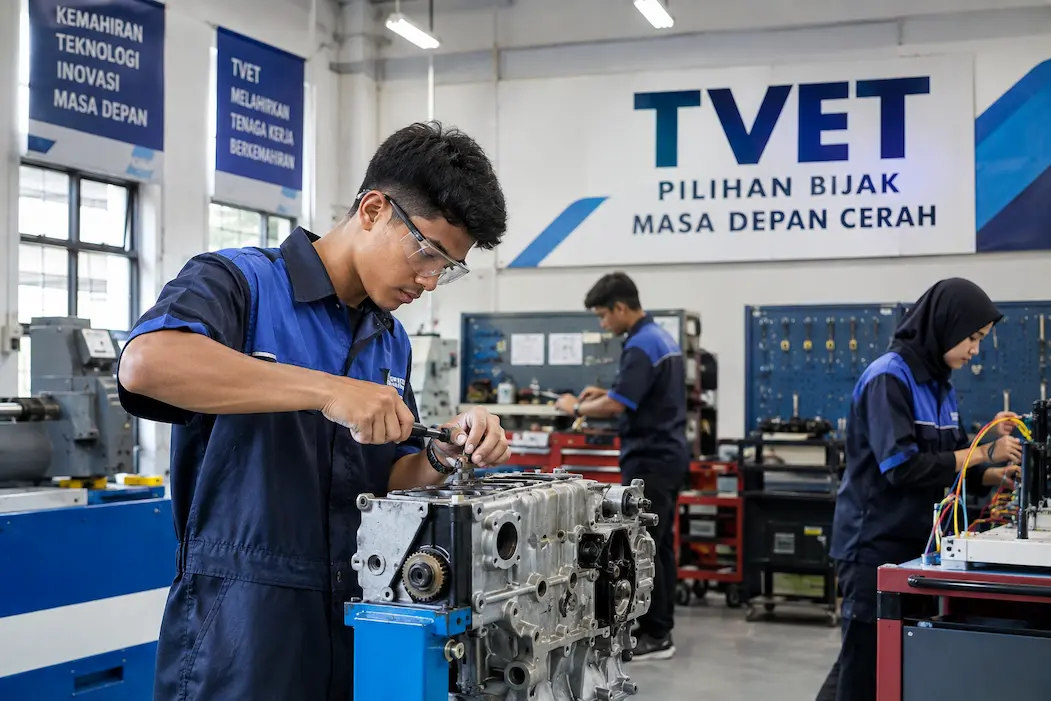
TVET stands for Technical and Vocational Education and Training. Practical knowledge, technical skills, professional competence, and labor market skills are central to this education and training approach. Traditional academic education emphasizes theory, reading, writing, research, and exams. Vocational and Technical Education (TVET) balances theory and practice. Depending on the program, students may learn in workshops, laboratories, kitchens, computer labs, training facilities, or simulated workplaces.
However, this approach does not mean that TVET is “easier” than formal education. Students in technical fields must understand concepts, follow safety procedures, solve problems, take tests, and meet the requirements of the program. Learning generally places more emphasis on practical and vocational skills. For example, students studying electrical engineering learn theoretical knowledge and practical skills, such as wiring, circuit testing, reading technical drawings, and safely using equipment. Students studying automotive engineering learn about vehicle systems, how to diagnose faults, and how to perform maintenance. The goal is to develop a planned learning trajectory and cultivate students’ practical skills.
How TVET Works in Malaysia
The Malaysian TVET system involves various ministries, government agencies, public institutions, private training institutes, and trade associations. This means that no single agency is responsible for overseeing all TVET programs throughout the country. The courses offered by institutions and colleges vary depending on the qualification level and field of study. The institution and the course determine the admission requirements, costs, study duration, assessment methods, and advancement opportunities.
Some vocational training programs (TVET) are aimed at recent graduates, while others are intended for students who wish to update their skills or obtain technical certificates. There are also pathways for working professionals to acquire new skills. Candidates need to understand that “TVET” refers to a broad field of education and training, not to a specific qualification. Students choosing TVET should look beyond the general terminology and ask practical questions relevant to the course: What qualification will I obtain? Is the course officially recognized? What practical skills will I learn? Which sectors hire graduates? Can I further develop my career?
Main Pathways Within Vocational Education
There are many different entry pathways within vocational education in Malaysia. The best route depends on a student’s prior education, interests, school performance, career goals, and learning style. Some secondary school students pursue technical or vocational training. Others start with certificate courses and then proceed to a diploma or a higher degree. Still others opt for skills training focused on professional competencies and practical experience in the industry.
The opportunities to pursue higher education vary significantly by institution. Students in engineering and technical fields can opt for certificates, diplomas, or other technical qualifications. Students in the culinary arts, on the other hand, can pursue a different course of study. Crucially, vocational education is not the end point. Many programs offer opportunities to progress to further studies, although future prospects depend on the qualifications obtained and the institution where you started.
Common progression pattern
A simplified pathway may look like this:
Secondary education → Skills or Certificate-level training → Diploma or advanced technical qualification → Higher education or employment
This is only a general example. Not every student will follow the same sequence, and some programs may provide direct entry into employment after completion.
Where Can You Study TVET in Malaysia?
TVET education is available through a wide range of institutions. Students should compare them carefully because each may have a different focus, admission process, campus environment, and qualification structure.
| Institution Type | Typical Focus | Suitable For |
|---|---|---|
| Polytechnics | Technical, engineering, business, hospitality, and applied fields | Students seeking structured diploma and technical education |
| Community Colleges | Practical and skills-based programmes | Students seeking accessible technical and vocational training |
| Vocational Colleges | Technical and vocational education | Students interested in practical career-focused education |
| Skills Training Institutions | Occupational and technical competencies | Students seeking hands-on skills development |
| Industry-linked training centers | Specialised technical and workplace skills | Students targeting specific industries |
| Private TVET Providers | Various technical and professional fields | Students seeking additional programme options |
Examples of organizations and institutions involved in Malaysia’s wider TVET ecosystem include the Ministry of Higher Education, the Ministry of Education, the Ministry of Human Resources, MARA institutions, polytechnics, community colleges, and other government or private training providers. Because the sector is broad, applicants should verify the institution’s current status and the recognition of the specific qualification before enrolling.
TVET Qualifications and Study Levels
TVET programs can lead to different types of qualifications. The exact title depends on the institution and program, but students may encounter certificates, diplomas, skills qualifications, and other technical credentials. At an introductory level, certificate programs may help students develop foundational technical knowledge and occupational skills. Diploma-level programs generally involve broader technical knowledge and may prepare students for technician, supervisory, or other skilled roles, depending on the field.
Some students may later continue into advanced qualifications or related higher education programs. One important consideration is recognition. Students should check whether the qualification is recognized by the relevant Malaysian authority and whether it meets the entry requirements for further education or employment in their chosen field. Do not assume that two qualifications with similar names are automatically equivalent. Recognition and progression opportunities can depend on the awarding body and program.
What Do TVET Students Learn?
The subjects taught in TVET depend heavily on the chosen field. A student in automotive technology will not have the same curriculum as someone studying hospitality or information technology. However, many programs combine several types of learning. Students may study technical theory, practical skills, workplace safety, problem-solving, communication, and basic professional practices.
Common TVET fields can include:
- Electrical and electronic technology
- Mechanical and manufacturing technology
- Automotive technology
- Construction and building services
- Information technology and digital systems
- Hospitality and culinary arts
- Agriculture and agro-technology
- Welding and fabrication
- Air-conditioning and refrigeration
- Logistics and transportation
- Creative and technical design
- Renewable energy and green technology
The field you choose should match both your interests and the type of work you can realistically see yourself doing. A program may be technically strong, but that does not make it the right choice if you dislike the daily tasks associated with the occupation.
Who Can Enter a TVET Program?
TVET is not limited to one type of student. Entry requirements vary by institution and program, but school leavers are among the main groups who consider vocational and technical education. Some programs may require specific academic subjects or minimum results. Others may place greater emphasis on practical aptitude, technical interests, interviews, or other requirements.
Students who did not achieve the results they hoped for in traditional academic subjects should not automatically assume that TVET is unavailable to them. There are different types of programs with different entry requirements. At the same time, students should not choose TVET simply because they believe it is an easier alternative. Technical training still requires discipline, attendance, practical ability, and a willingness to learn. Before applying, check the official requirements for the exact program. Pay attention to age limits, academic prerequisites, health or physical requirements where relevant, and any additional selection procedures.
How TVET Learning Is Different
The most noticeable difference between TVET and many traditional academic programs is the emphasis on applied learning. Students are often expected to demonstrate what they can do, not only explain what they know. For example, an engineering-related student may need to operate equipment or complete technical projects. A hospitality student may practice food preparation or service procedures. An IT student may build or configure systems rather than only study computer concepts in textbooks. This style of learning can be particularly suitable for students who learn better through practice.
However, practical learning does not mean that theory is ignored. Students need theoretical understanding to make good decisions, troubleshoot problems, and adapt when technology changes. Modern workplaces also require communication, teamwork, digital literacy, and problem-solving. A strong TVET graduate therefore needs more than technical ability alone. When comparing courses, ask how much time students spend on practical training, workshops, industry projects, or workplace exposure. The learning experience can vary significantly between programs.
Career Opportunities After TVET
One of the main reasons students choose TVET is the opportunity to develop skills linked to specific industries. Depending on the qualification and field, graduates may pursue roles in manufacturing, construction, engineering support, information technology, hospitality, automotive services, electrical work, logistics, agriculture, and other sectors. Career outcomes depend on several factors. These include the quality of the program, the student’s technical competency, work experience, communication skills, industry demand, location, and the specific qualification earned.
A TVET qualification is not an automatic guarantee of employment. Students should research the labor market before choosing a course. Look at actual job advertisements and identify what employers are asking for. Check whether they require a particular qualification, technical certification, software skill, driving license, language ability, or work experience. This simple research can help you select a program based on realistic career opportunities rather than assumptions.
Advantages and Challenges of Choosing TVET
TVET offers several potential advantages, especially for students who prefer practical and career-focused learning.
Potential advantages
- Strong focus on practical skills
- Exposure to technical equipment and workplace processes
- Training linked to specific industries
- Opportunities to develop job-ready competencies
- Multiple entry and progression routes
- Suitable for students who enjoy learning through practice
- Potential pathways into further education
There are also challenges that students should consider. Technical fields can require physical work, strict safety procedures, shift work, or continuous skills development. Some occupations may also require additional certifications or licensing before a person can perform certain regulated duties. Students should therefore research the actual working environment, not just the course content. Ask yourself whether you would enjoy the job after graduation. Studying automotive technology may sound interesting, for example, but the daily work could involve standing for long periods, working in demanding environments, and handling complex technical problems.
Common Mistakes When Choosing a TVET Programme
- Choosing only because the course is popular: Popularity does not guarantee that a program matches your interests or career goals.
- Ignoring accreditation and recognition: A qualification should be checked carefully before you commit several years of time and money.
- Looking only at course titles: Two programs with similar names can have very different curricula and career outcomes.
- Failing to research employers: Look at actual job requirements before selecting a field.
- Assuming TVET is only for weak students: Technical education requires practical ability, discipline, and problem-solving. It is a different learning route, not simply a lower academic option.
- Ignoring progression opportunities: Find out whether you can continue your education after completing the qualification.
- Choosing based on location alone: A nearby program may be convenient, but program quality and career relevance should also be considered.
How to Choose the Right TVET Course
Start with yourself rather than the institution. Think about the kind of work you enjoy and the activities that hold your attention. Do you like fixing things, working with computers, building objects, designing systems, cooking, working outdoors, or solving technical problems? Then research careers that match those interests. Find out what qualifications employers expect and whether the industry is likely to offer opportunities in the locations where you are willing to work.
After that, compare specific institutions and programs.
| Question | Why It Matters |
|---|---|
| What qualification will I receive? | Helps you understand your education and career options |
| Is the program recognized? | Supports further study and employment planning |
| What practical training is included? | Shows how much hands-on experience you will gain |
| Where do graduates work? | Provides insight into possible career outcomes |
| Can I continue studying? | Helps you plan long-term education goals |
| What are the total costs? | Prevents unexpected financial pressure |
| Are there industry partnerships? | May provide useful exposure to workplace practices |
If possible, visit the campus or attend an open day. Seeing workshops, laboratories, equipment, and student facilities can tell you much more than a brochure.
FAQs
1. Is Technical and Vocational Education (TVET) only suitable for students with poor grades?
No. TVET is for students of all levels and with diverse interests, including gifted students. TVET requires theoretical knowledge, practical skills, problem-solving ability, discipline, and safety awareness. Some students choose TVET because they want to gain practical experience or aspire to a technical career. It should be viewed as an independent educational pathway, not just as an alternative for students with learning difficulties.
2. Is TVET accredited in Malaysia?
Accreditation varies by program and qualification. Because there are many TVET institutions in Malaysia, students should check the accreditation status of the program before enrolling. This is important because accreditation impacts employment and education. Do not assume that all TVET programs are the same. Before enrolling, check the institution, the accrediting body, the accreditation system, and the official information.
3. Can TVET graduates find a good job?
No school education guarantees a job, but TVET offers students a wide range of technical and industry-specific professional skills. Qualifications, technical skills, industry needs, work experience, communication skills, and other factors all influence your chances of finding a job. Before enrolling in a program, it is wise to look at job openings in the industry. This helps you gain insight into employers’ needs and whether the program develops the skills you need.
4. Can students from Vocational and Technical Education (TVET) progress to university?
Some TVET graduates can progress to higher education, depending on their qualifications and the institution’s admission requirements. The program offers multiple progression options. If you want to obtain a degree, research your progression options before enrolling in a TVET program. Ask the school which further education programs accept their graduates and what additional requirements there are.
5. What is the difference between TVET and university?
The main difference often lies in the balance between theoretical and practical learning. Many university programs include practical components, but academic theory, research, and conceptual knowledge may predominate. TVET, on the other hand, emphasizes applied technical skills, professional competence, workshops, laboratories, and workplace training. These two paths are not mutually exclusive. A student’s qualifications and career ambitions can determine the choice between technical education and higher education, depending on the chosen field.
Conclusion
Technical and Vocational Education (TVET) is essential for education and skills development in Malaysia. It offers students practical training in technical, vocational, retraining, and labor skills. Vocational education has outgrown the traditional view that it only encompasses manual labor. Nowadays, engineering, computer technology, manufacturing, automotive engineering, hotel management, construction, agriculture, electrical engineering, logistics, and other professional fields all fall under vocational education. Students can choose their institution and level of education based on their educational and career goals.
Choosing a vocational program is not the most important decision; the key is choosing the right program. Students must consider the academic qualifications, recognition, practical training, career prospects, costs, and advancement opportunities of the program. Research job openings in relevant fields and determine if they are of interest to them. Vocational education is especially important for students who learn best by doing and want to acquire industry-specific skills. It should not be viewed as a second choice alongside university. The right educational path must align with a student’s abilities, interests, goals, and long-term plans.
References and Official Resources
Students and parents should check the latest information directly with Malaysian government agencies and official education portals because program availability, entry requirements, and admission procedures can change.
- TVET Malaysia — Official TVET Information Portal
- Ministry of Higher Education Malaysia
- Ministry of Education Malaysia
- Ministry of Human Resources Malaysia
- Malaysian Qualifications Agency (MQA)
- Majlis Amanah Rakyat (MARA)
- PolyCC — Polytechnic and Community College Education
- SkillsMalaysia — Department of Skills Development