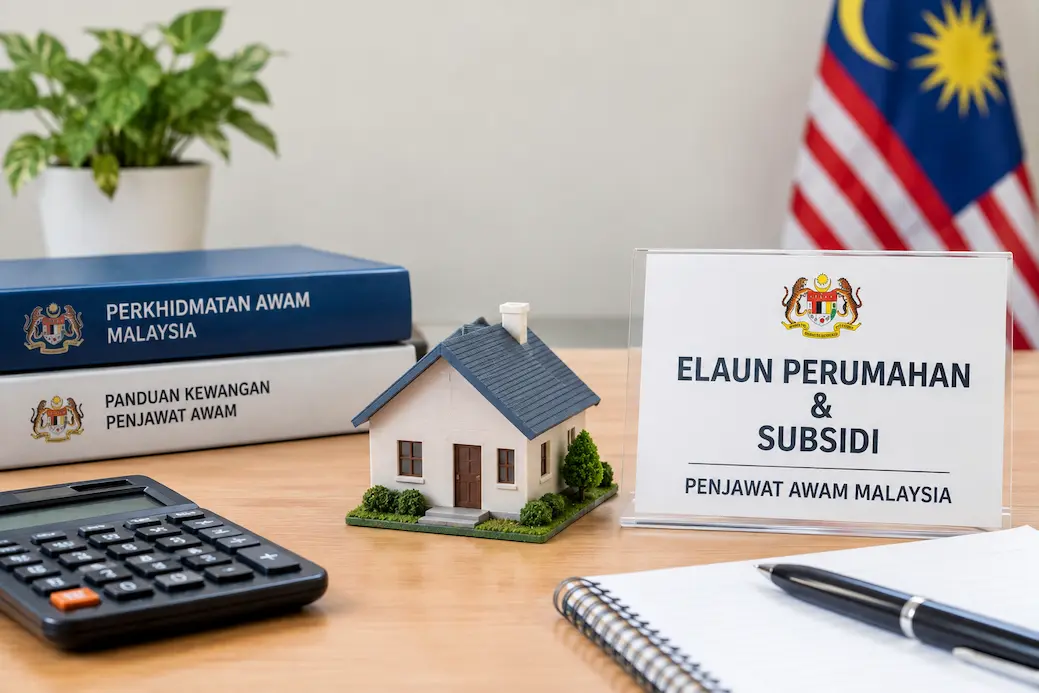
Salah satu tarikan terbesar yang mendorong ribuan graduan dan profesional memohon kerjaya di sektor awam bukanlah semata-mata gaji pokok, sebaliknya pakej elaun dan kemudahan jaringan keselamatan kewangan yang disediakan oleh kerajaan. Di antara pelbagai jenis imbuhan tetap bulanan, Elaun Perumahan (ITP) dan kemudahan pembiayaan perumahan merupakan tunjang utama yang menjamin kestabilan hidup penjawat awam.
Sebagai pentadbir yang menguruskan emolumen dan skim perkhidmatan, saya sering melihat penjawat awam baharu keliru mengenai kadar sebenar elaun yang layak diterima berdasarkan lokasi penempatan dan gred jawatan mereka. Panduan komprehensif ini merungkai struktur elaun perumahan, kadar semasa, serta kaedah memanfaatkan kemudahan pinjaman perumahan kerajaan melalui Lembaga Pembiayaan Perumahan Sektor Awam (LPPSA).
Struktur Imbuhan Tetap Perumahan (ITP)
Imbuhan Tetap Perumahan (ITP) adalah elaun bulanan yang dibayar kepada pegawai berjawatan tetap atau kontrak untuk membantu menampung kos sewaan atau bayaran ansuran rumah. Kadar bayaran ITP tidak dibuat secara pukul rata; ia ditentukan secara strategik berdasarkan dua faktor utama:
- Gred Perkhidmatan Anda: Semakin tinggi gred jawatan anda (contohnya Gred 41 berbanding Gred 19), semakin tinggi kadar ITP yang diperuntukkan.
- Lokasi Tempat Bertugas (Kawasan): Kadar elaun berbeza mengikut zon ibu kota, bandar besar, atau kawasan luar bandar bagi menampung kos sara hidup setempat.
Jadual Rujukan: Anggaran Kadar Imbuhan Tetap Perumahan (ITP)
Rujuk matriks anggaran kadar ITP bulanan di bawah yang diselaraskan mengikut kumpulan perkhidmatan dan zon penempatan utama:
| Kumpulan Gred Perkhidmatan | Kadar Zon Bandar Utama (KL, Putrajaya, JB, Penang) | Kadar Zon Luar Bandar / Negeri Lain |
|---|---|---|
| Kumpulan Pelaksana (Gred 19 – 28) | RM 300.00 – RM 400.00 | RM 250.00 – RM 300.00 |
| Kumpulan Pengurusan & Profesional (Gred 29 – 44) | RM 700.00 – RM 900.00 | RM 550.00 – RM 700.00 |
| Kumpulan Pengurusan Tertinggi (Gred 48 ke atas / JUSA) | RM 1,200.00 – RM 1,800.00 | RM 900.00 – RM 1,200.00 |
Kemudahan Pembiayaan Perumahan LPPSA
Selain elaun sewaan bulanan (ITP), keistimewaan terbesar penjawat awam tetap adalah akses kepada kemudahan pinjaman perumahan berfaedah rendah melalui agensi berkanun Lembaga Pembiayaan Perumahan Sektor Awam (LPPSA). Berbeza dengan pinjaman bank komersial swasta, LPPSA menawarkan kemudahan pembiayaan sehingga 100% tanpa caj faedah yang membebankan (menggunakan konsep kadar keuntungan tetap yang rendah).
Kelayakan Pembiayaan Pertama, Kedua, dan Ketiga
Dasar pembiayaan LPPSA membenarkan penjawat awam membuat pinjaman berulang kali sepanjang kerjaya mereka, tertakluk kepada kelayakan amaun maksimum mengikut gred:
- Pembiayaan Pertama: Layak memohon amaun maksimum berdasarkan kelayakan gaji (boleh mencecah ratusan ribu ringgit untuk membina rumah di atas tanah sendiri, membeli rumah siap, rumah lelong, atau hartanah dalam pembinaan).
- Pembiayaan Kedua: Dibenarkan selepas pembiayaan pertama selesai dibayar sepenuhnya atau melalui kaedah pelupusan hartanah tertentu dengan kelulusan lembaga.
Panduan Langkah demi Langkah: Permohonan Melalui Portal LPPSA
Prosedur permohonan pembiayaan perumahan kini dilakukan sepenuhnya secara digital melalui portal rasmi LPPSA.
Langkah 1: Semakan Kelayakan Melalui Kalkulator LPPSA
Layari portal rasmi LPPSA (lppsa.gov.my) dan gunakan modul *Kalkulator Kelayakan Pembiayaan*. Masukkan angka Gaji Pokok serta jumlah potongan sedia ada (seperti pinjaman peribadi bank atau potongan koperasi) untuk mengetahui nilai maksimum pinjaman rumah yang layak anda pohon.
Sistem Aktif
SIMULASI KELAYAKAN GRED 41:
- Gaji Pokok Semasa: RM 2,800.00
- Had Maksimum Potongan Gaji (60%): RM 1,680.00
- Anggaran Kelayakan Maksimum Pembiayaan Rumah: RM 450,000.00 (Tertakluk kepada tempoh umur persaraan 60 tahun).
Langkah 2: Penghantaran Dokumen Hartanah Secara Digital
Selepas menandatangani Perjanjian Jual Beli (SPA) dengan pemaju atau pemilik rumah sub-sale, muat naik dokumen lengkap (geran tanah, salinan SPA, slip gaji terkini, dan surat pengesahan majikan) ke dalam portal e-Perumahan LPPSA.
Nasihat Pentadbiran / Tips Orang Dalam
Sebagai individu yang menguruskan fail emolumen, nasihat penting saya kepada penjawat awam baharu ialah: Jangan gunakan keseluruhan 60% had maksimum potongan gaji anda untuk pinjaman perumahan LPPSA.
Walaupun sistem membenarkan anda meminjam hingga tahap maksimum kelayakan gaji, anda perlu mengambil kira potongan wajib yang lain seperti caruman KWSP/Pencen, cukai LHDN (PCB), serta potongan kutipan kelab atau koperasi peribadi. Pastikan baki gaji bersih (*net pay*) anda selepas menolak ansuran rumah masih selesa untuk menampung kos sara hidup harian, terutamanya apabila inflasi meningkat.
Satu lagi strategi: Manfaatkan kemudahan Kuarters Kerajaan (jika tersedia di kawasan penempatan anda) pada awal kerjaya. Dengan tinggal di kuarters, anda boleh menyimpan seratus peratus elaun ITP bulanan yang diterima tanpa perlu membayar kos sewa rumah luar, sekali gus membina modal deposit untuk pembelian rumah pertama anda.
Penyelesaian Masalah & Ralat Elaun Perumahan
Isu pentadbiran berkaitan elaun kerap berlaku akibat kelewatan kemas kini data pertukaran tempat bertugas. Berikut adalah 3 krisis lazim dan cara mengatasinya:
1. Elaun ITP Tidak Berubah Selepas Bertukar Daerah / Negeri
- Punca: Anda telah bertukar tempat bertugas dari bandar kecil ke Kuala Lumpur, tetapi bahagian HR jabatan belum mengemas kini butiran lokasi di dalam sistem HRMIS, menyebabkan kadar ITP anda kekal pada kadar luar bandar.
- Penyelesaian: Dapatkan surat arahan penempatan rasmi, isi borang perubahan elaun di unit gaji jabatan anda, dan pastikan kerani kewangan mengemas kini kod stesen penempatan anda di HRMIS sebelum tarikh tutup kunci gaji bulan tersebut. Pembayaran *backdated* (tunggakan elaun) akan dikreditkan pada bulan berikutnya jika berlaku kelewatan.
2. Suami Isteri Penjawat Awam: Isu Tuntutan ITP Penuh
- Punca: Kedua-dua suami isteri adalah penjawat awam dan bekerja di daerah yang sama, tetapi kedua-duanya menuntut ITP penuh secara berasingan (melanggar peraturan pekeliling penduaan elaun).
- Penyelesaian: Mengikut peraturan Perbendaharaan, hanya seorang sahaja suami atau isteri yang layak menuntut ITP penuh, manakala pasangan yang seorang lagi layak menerima elaun separuh (ITP Paginasi) atau elaun bantuan sewa mengikut syarat perkahwinan penjawat awam. Pastikan pengisytiharan dibuat dengan jujur untuk mengelakkan tuntutan lebih bayar (*overpayment*) yang perlu dipulangkan kelak.
3. Permohonan LPPSA Tertangguh Akibat Isu Hakmilik Tanah (Geran)
- Punca: Hartanah sub-sale yang ingin dibeli melibatkan geran tanah induk (*master title*) yang masih belum dipecah sempadan, melambatkan proses gadaian peguam LPPSA.
- Penyelesaian: Dapatkan surat pengesahan pemaju atau pemilik asal mengenai status pemecahan geran, dan lantik peguam panel yang berdaftar dengan senarai panel rasmi LPPSA bagi mempercepatkan urusan perundangan tanah tersebut.
Soalan Lazim (FAQ) Elaun & Perumahan Kerajaan
1. Adakah saya layak menerima Elaun Perumahan (ITP) jika saya sedang mengambil cuti belajar bergaji penuh?
Biasanya tidak. Semasa tempoh Cuti Belajar Bergaji Penuh atau Separuh Gaji (di dalam atau luar negara) melebihi tempoh tertentu, pembayaran elaun tetap seperti ITP dan COLA akan dihentikan sementara, dan anda hanya akan menerima emolumen asas mengikut syarat pekeliling cuti belajar JPA.
2. Bolehkah penjawat awam berstatus kontrak (COS) memohon pinjaman perumahan LPPSA?
Tidak. Kemudahan pinjaman perumahan bersubsidi LPPSA hanya eksklusif untuk pegawai berstatus Tetap sahaja. Pegawai berstatus kontrak (COS) perlu memohon pembiayaan perumahan melalui bank perdagangan konvensional swasta di pasaran terbuka.
3. Berapa lamakah tempoh proses kelulusan pinjaman perumahan LPPSA dari tarikh hantar dokumen?
Dengan sistem digitalisasi penuh portal e-Perumahan LPPSA hari ini, purata tempoh kelulusan bersyarat bagi pinjaman perumahan memakan masa antara 7 hingga 14 hari bekerja, manakala pengeluaran bayaran peringkat pertama kepada pemaju/peguam bergantung kepada kesempurnaan dokumen perundangan jual beli.
Pengurusan elaun perumahan dan kemudahan pinjaman LPPSA adalah kelebihan strategik yang menstabilkan kedudukan kewangan jangka panjang seorang penjawat awam. Rancang pembelian hartanah anda dengan bijak, manfaatkan imbuhan ITP untuk meringankan beban bulanan, dan pastikan rekod perkhidmatan anda kekal cemerlang demi menjamin kesejahteraan hidup bersama keluarga tercinta.