
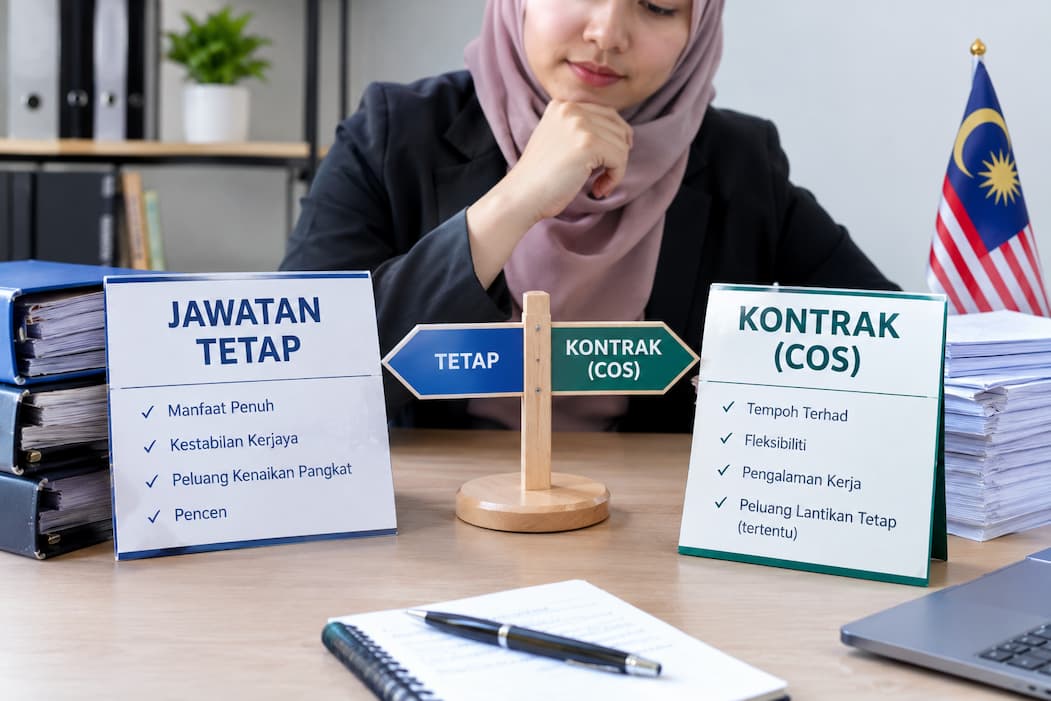
Apabila anda melayari portal SPA9 atau melihat iklan kekosongan jawatan kementerian, anda akan sering terkeliru dengan dua status perkhidmatan yang berbeza: Jawatan Tetap (Permanent) dan Jawatan Kontrak / Contract of Service (COS). Dalam iklim ekonomi semasa, kerajaan memperbanyakkan pengambilan jawatan berstatus kontrak bagi projek-projek khusus di bawah kementerian bertaraf teknikal dan perkhidmatan barisan hadapan.
Sebagai pentadbir yang menguruskan urusan perjawatan dan perkhidmatan awam, saya sering menerima persoalan daripada graduan baharu yang meragui masa depan kerja kontrak. Adakah kerja kontrak kerajaan menjamin masa depan seperti jawatan tetap? Apakah beza elaun, pencen, dan kemudahan pinjaman perumahan mereka? Panduan komprehensif ini membongkar realiti pentadbiran di sebalik kedua-dua status perkhidmatan ini agar anda boleh membuat keputusan kerjaya yang bijak.
Jadual Rujukan: Perbandingan Bersemuka Tetap vs Kontrak (COS)
Matriks perbandingan rasmi di bawah menggariskan perbezaan mutlak dari segi hak, faedah, dan keistimewaan antara penjawat awam tetap dan penjawat kontrak di bawah Sistem Saraan Malaysia (SSM).
| Kriteria Perbandingan | Jawatan Tetap (Permanent) | Jawatan Kontrak / COS |
|---|---|---|
| Tempoh Perkhidmatan | Berterusan sehingga umur persaraan wajib (kini 60 tahun). | Berpangkalan pada tempoh tetap (lazimnya 1 hingga 3 tahun, boleh diperbaharui). |
| Skim Pencen vs KWSP | Pilihan Skim Pencen (Pencen Pesara) atau Caruman KWSP Kerajaan. | Wajib mencarum KWSP & PERKESO seperti pekerja sektor swasta. |
| Kemudahan Pinjaman Perumahan (LPPSA) | Layak memohon pembiayaan perumahan kerajaan bersubsidi penuh melalui LPPSA. | TIDAK LAYAK memohon LPPSA (kecuali diserap ke jawatan tetap). |
| Rawatan Perubatan Keluarga | Percuma di hospital/klinik kerajaan untuk diri, pasangan, dan anak-anak. | Terhad kepada diri sendiri (bergantung kepada terma kontrak kementerian). |
Memahami Kontrak Perkhidmatan (COS): Kelebihan & Kekangan
Walaupun jawatan kontrak kelihatan kurang menarik berbanding jawatan tetap akibat ketiadaan pencen bulanan selepas bersara, ia sebenarnya mempunyai kelebihan strategik yang ramai lepasan ijazah terlepas pandang:
- Gaji Permulaan & Elaun Yang Setara: Gaji pokok dan elaun tetap (seperti ITP, ITKA, dan COLA) yang diterima oleh pegawai kontrak adalah mengikut gred rasmi SSM yang sama (contohnya Gred 41 atau Gred 29). Anda tidak didiskriminasikan dari segi bayaran bulanan semasa bertugas.
- Laluan Pantas Masuk Sektor Awam: Persaingan untuk mendapat jawatan tetap di SPA9 adalah sangat sengit. Mengambil jawatan kontrak (COS) membolehkan anda bertapak di dalam kementerian lebih awal, membina rangkaian kerja (networking), dan memahami selok-belok pentadbiran awam.
- Peluang Penyerapan ke Tetap (Absorption): Kerajaan dari semasa ke semasa membuka laluan khas penyerapan pegawai kontrak berprestasi cemerlang ke jawatan tetap tanpa perlu melalui tapisan peperiksaan PSEE yang sukar dari peringkat awal.
Panduan Langkah demi Langkah: Peralihan Kontrak ke Tetap
Jika anda sedang berkhidmat sebagai pegawai kontrak kerajaan di bawah agensi persekutuan atau negeri, ikuti langkah pentadbiran ini untuk meningkatkan peluang diserap ke jawatan tetap:
Modul Penyerapan
KRITERIA UTAMA PERMOHONAN PENYERAPAN TETAP:
- Prestasi LNPT Cemerlang: Markah Laporan Penilaian Prestasi Tahunan (LNPT) anda wajib konsisten melebihi 85% selama sekurang-kurangnya 2 tahun berturut-turut.
- Sokongan Penuh Ketua Jabatan: Perakuan bertulis daripada Setiausaha Bahagian Sumber Manusia kementerian mengesahkan perkhidmatan anda amat diperlukan.
- Kekosongan Waran Perjawatan: Wujudnya peruntukan jawatan tetap kosong di jabatan tersebut untuk diselaraskan.
Nasihat Pentadbiran / Tips Orang Dalam
Sebagai individu yang menguruskan perjawatan, nasihat paling jujur saya kepada graduan: Jangan menolak tawaran kerja kontrak kerajaan semata-mata kerana takut hilang kestabilan. Pasaran buruh sektor swasta hari ini juga banyak mengamalkan kontrak berasaskan projek.
Apabila anda memegang status pegawai kontrak kementerian, resume anda membawa kredibiliti pentadbiran yang tinggi. Anda bukan sekadar penganggur yang menunggu panggilan SPA9 selama bertahun-tahun, sebaliknya anda sedang mengumpul pengalaman rasmi mengendalikan bajet kerajaan, menggubal surat rasmi berlandaskan arahan perbendaharaan, dan berurusan dengan orang awam. Pengalaman ini memberikan anda kelebihan psikologi yang ketara apabila anda dipanggil untuk sesi temu duga tetap pada masa hadapan.
Penyelesaian Masalah & Ralat Isu Kontrak Kerajaan
Perkhidmatan kontrak mempunyai kerenah birokrasinya yang tersendiri. Berikut adalah 3 krisis lazim dan cara menanganinya:
1. Kontrak Tamat Tetapi Surat Pembaharuan (Renewal) Lambat Dikeluarkan
- Punca: Proses kelulusan bajet kontrak daripada Jabatan Perkhidmatan Awam (JPA) atau Perbendaharaan mengambil masa, menyebabkan pegawai bertugas tanpa surat pelantikan sah selama beberapa minggu.
- Penyelesaian: Jangan panik. Bahagian Sumber Manusia kementerian lazimnya mengeluarkan surat sokongan sementara. Pastikan anda terus hadir bertugas dan desak Unit Pentadbiran mempercepatkan dokumen pelanjutan kontrak bagi memastikan pembayaran gaji bulanan anda tidak tergendala (*gaji sangkut*).
2. Ingin Memohon Pinjaman Perumahan Bank Swasta Semasa Berjawatan Kontrak
- Punca: Bank komersial swasta sering mengenakan syarat ketat atau menolak permohonan pinjaman perumahan pegawai kontrak kerana ketiadaan jaminan kerja jangka panjang (pencen).
- Penyelesaian: Lampirkan surat pengesahan majikan (Kementerian) yang menyatakan rekod sejarah pembaharuan kontrak anda yang stabil (contohnya telah berkhidmat 4 tahun berturut-turut) serta lampirkan salinan penyata cukai LHDN terkini untuk membuktikan kestabilan aliran tunai peribadi anda.
3. Terikat Dengan Penalti Jika Berhenti Kontrak Awal
- Punca: Anda mendapat tawaran kerja swasta bergaji tinggi semasa kontrak kerajaan anda berbaki 6 bulan lagi, dan anda ingin berhenti serta-merta.
- Penyelesaian: Semak klausa perjanjian kontrak (Contract of Service) anda. Kebanyakan kontrak kerajaan memerlukan anda mengemukakan notis berhenti kerja 30 hari hingga 3 mengikut terma, atau membayar ganti rugi (indemnity) bersamaan dengan jumlah emolumen bagi tempoh notis yang gagal dipatuhi. Patuhi prosedur notis rasmi untuk mengelakkan nama anda disenaraihitamkan daripada berkhidmat semula di sektor awam.
Soalan Lazim (FAQ) Status Kerjaya Kerajaan
1. Adakah penjawat awam kontrak layak menerima Bonus Raya (Bantuan Khas Kewangan) tahunan?
Ya. Kerajaan mengumumkan Bantuan Khas Kewangan (BKK) sempena Aidilfitri atau akhir tahun secara merata kepada semua penjawat awam yang layak, termasuk pegawai berstatus kontrak (COS) dan pekerja MySTEP, tertakluk kepada tarikh kuat kuasa perkhidmatan yang ditetapkan dalam pekeliling semasa Perbendaharaan.
2. Bolehkah saya memohon jawatan tetap di SPA9 walaupun saya sedang berkhidmat sebagai pegawai kontrak kerajaan?
Sangat di galakkan! Status anda sebagai penjawat kontrak tidak menyekat anda daripada terus memohon jawatan tetap di portal SPA9. Malah, pengalaman kerja semasa anda di kementerian akan membantu anda menjawab soalan teknikal dengan cemerlang apabila dipanggil ke sesi temu duga tetap kelak.
3. Adakah cuti rehat tahunan pegawai kontrak sama dengan pegawai tetap?
Kadar kelayakan Cuti Rehat tahunan pegawai kontrak dikira mengikut formula pro-rata (berdasarkan tempoh bulan perkhidmatan dalam tahun tersebut, lazimnya sekitar 20 hingga 25 hari setahun bergantung kepada gred perkhidmatan), sama seperti kelayakan pegawai tetap persekutuan.
Memilih antara jawatan tetap dan kontrak kerajaan adalah soal strategi fasa kerjaya. Jika jaminan masa depan jangka panjang dan pencen adalah matlamat utama, jawatan tetap adalah jawatan idaman. Namun, jika anda ingin membina pengalaman pentadbiran yang pantas dan meloloskan diri daripada belenggu pengangguran, jawatan kontrak kerajaan adalah landasan loncatan paling berkesan untuk mengubah masa depan kerjaya anda.